
Behind the Frame / Nature up close / 046
Two ducks, two distances
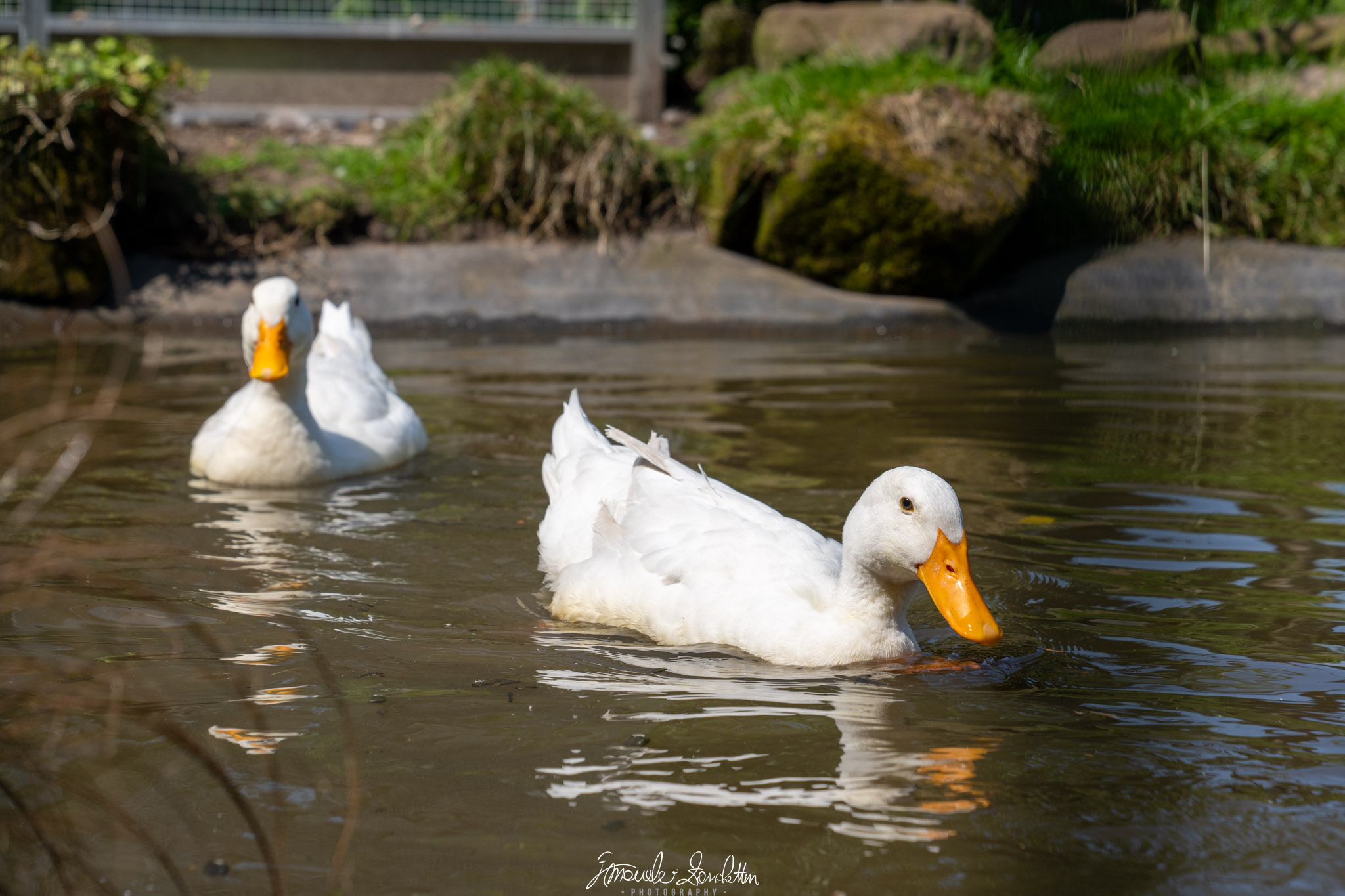
Two ducks and the shape of a pond suggest a circular journey: the movement I wanted to capture continues in the viewer’s imagination.
01 / The message
The story
I see in it.
I know there are distracting elements here that I could have excluded or reduced. What interested me in making the photograph, though, was a circular movement through the scene. The duck in front is the main subject; the one behind gives me a clue from which to imagine its earlier position.
I imagine the front duck arriving from the far right of the pond, passing across the left of the frame, through the place occupied by the rear duck, then coming towards us and leaving diagonally to the right. The idea of one duck following another helps me connect those points. It is the route I want the composition to suggest, with the pond’s geometry completing the curve.
02 / Technique serving the idea
Reading the
technical choices.
The JPEG records 70mm, f/5.6, 1/1000 sec and ISO 200. The near duck is more detailed and larger in the frame; the rear bird and the pond edge lead the eye into the distance. Here I am suggesting movement through placement and direction, rather than relying on a blurred subject.
For the same movement and framing, a shorter exposure generally reduces motion blur. [1] A crisp photograph can still invite us to imagine a journey. I would judge the chosen instant by whether the two ducks and the bend in the water make that imagined route readable.
Keep & build on
Two positions in an imagined journey
The rear duck offers a place where I can imagine the main subject having been. Their different sizes and distances help the eye connect the scene.
The pond gives the route a shape
The bank and the open water provide the setting for the turn. I would preserve enough of their geometry to support the circular reading.
A direction out of the frame
The near duck faces towards the right foreground. That direction gives the imagined path a next step beyond this single moment.
Question & explore
Reducing distractions without losing the curve
The gate, busy bank and stray foreground stems deserve attention. I would compare nearby viewpoints that reduce them while preserving the pond’s useful shape.
Choosing the relationship between the ducks
I would wait for a spacing that links the two birds without merging their outlines. The test is whether that spacing makes the imagined turn easier to follow.
Space ahead of the main subject
A little more room towards the right might help the diagonal exit. I would compare it with the current framing rather than crop away the space the story needs.
One practical next step
An experiment
to try.
Observe moving birds from a distance that does not disturb them. Before making a short sequence, imagine a route through the frame. Afterwards, choose the single photograph that best suggests where the main subject has come from and where it might go; compare that reading with the actual sequence.
Technical references
These sources support the marked technical explanations. The composition readings and experiments are my reflections.
Readers’ thoughts
Approved comments only · Shared across the English and Italian versions