
Behind the Frame / Places / 037
A platform between stillness and motion
Waiting for a train becomes time to experiment: a photograph can be worth making before it matches the picture in your head.
01 / The message
The story
I see in it.
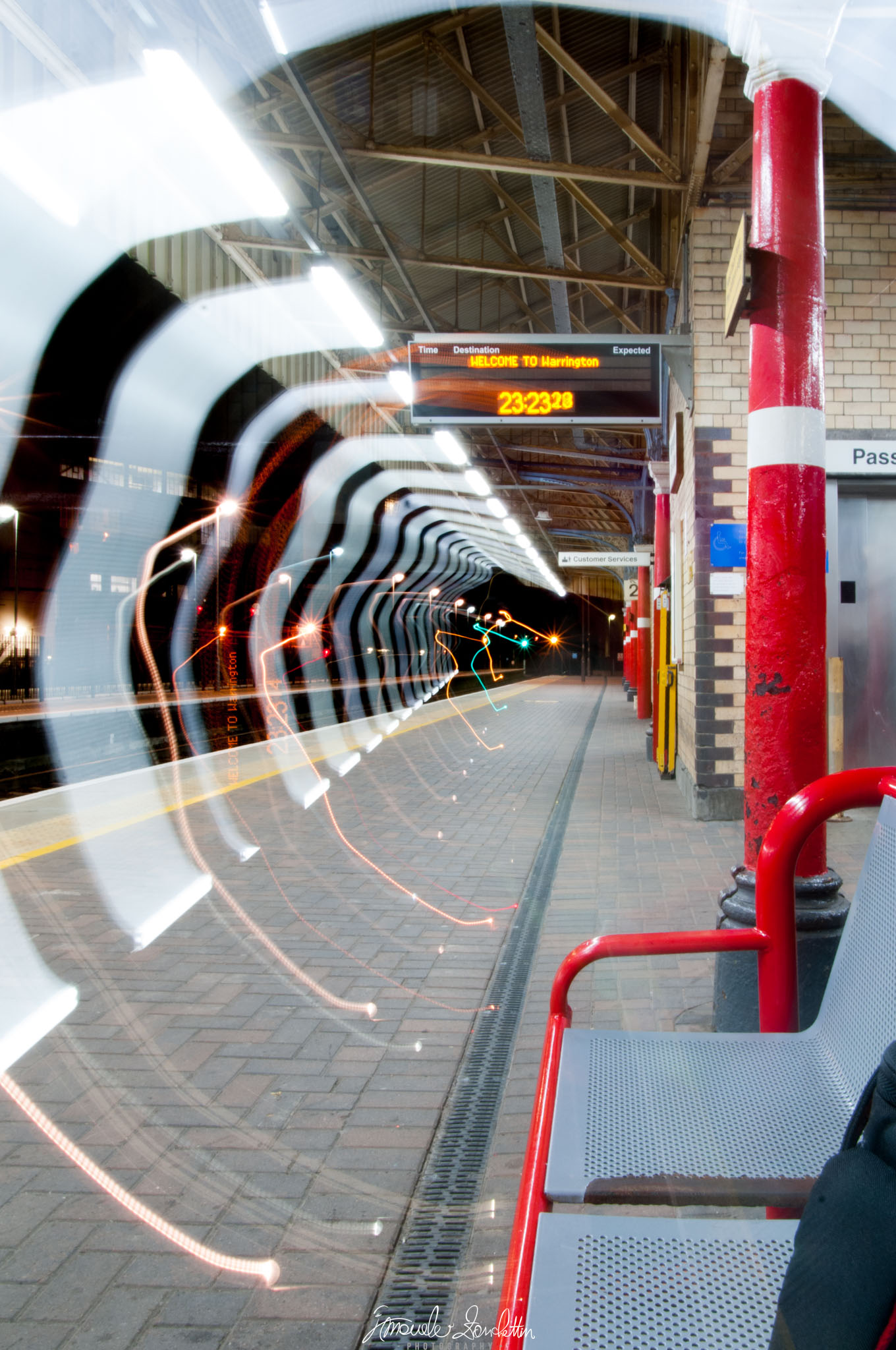
This was a playful way to pass the time while waiting for a train. The platform’s lights, columns and long perspective gave me something to experiment with. Instead of treating the wait as empty time, I used it to try turning an idea in my head into a photograph.
Could this result improve? Definitely. The bright sweeps are forceful and the different points of attention do not all sit comfortably together. But before expecting perfection, I need to experiment, try, get things wrong and try again. Reaching exactly the image I imagine may take many attempts; this frame is part of learning how to get there.
02 / Technique serving the idea
Reading the
technical choices.
The JPEG records 18mm, f/22, 10 seconds and ISO 200. The long exposure sits alongside recognisable platform structure and broad light traces. For the next exercise I would write down the exposure and any deliberate movement I try, so I can connect each result to the action that produced it.
Longer exposures can record movement as blur or trails. [1] I would make a simple reference frame, then vary one part of an experiment at a time. I want to understand how to shape the traces while leaving enough of the station readable, rather than judge every trial by how spectacular it looks.
Keep & build on
Making use of an ordinary wait
The station offers a subject without requiring a special outing. I would build on the habit of noticing opportunities to practise in the time already available.
Structure beneath the experiment
The red column, bench and converging roof beams still describe the platform. They give the sweeping traces something recognisable to work against.
A result with something to teach
The large white curves and finer coloured trails produce different effects. Comparing their shapes gives me specific decisions to explore in another attempt.
Question & explore
The brightest upper corner
The large pale sweep at the top left dominates. In another trial I would aim for a smaller or less insistent trace there and compare the balance.
A clearer place to begin
The board, red column and bench compete for attention. I would choose one as the main reference before changing the rest of the experiment.
Making attempts easier to compare
I would keep short notes and change one variable at a time. That gives an imperfect frame a useful role: showing which choice moved the result closer to the idea.
One practical next step
An experiment
to try.
At home, use a stationary lit object against a darker background. Make a supported reference exposure, then a separate deliberate camera-movement trial. Record what you changed and repeat with one small variation. Pick the frame that moves towards your idea and name one thing to try next.
Technical references
These sources support the marked technical explanations. The composition readings and experiments are my reflections.
Readers’ thoughts
Approved comments only · Shared across the English and Italian versions