
Personal projects
Half Life: how a personal portrait project finds its meaning
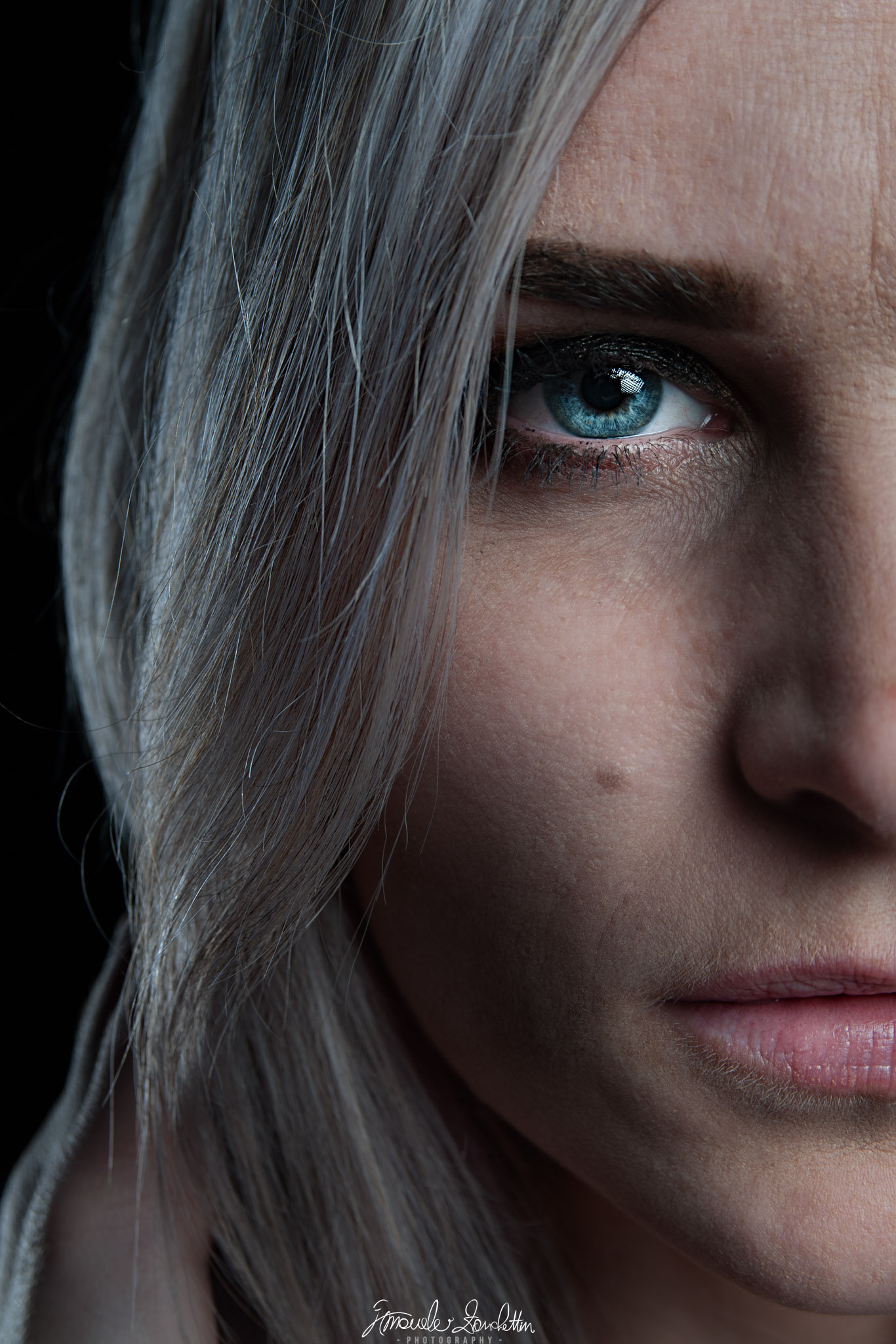
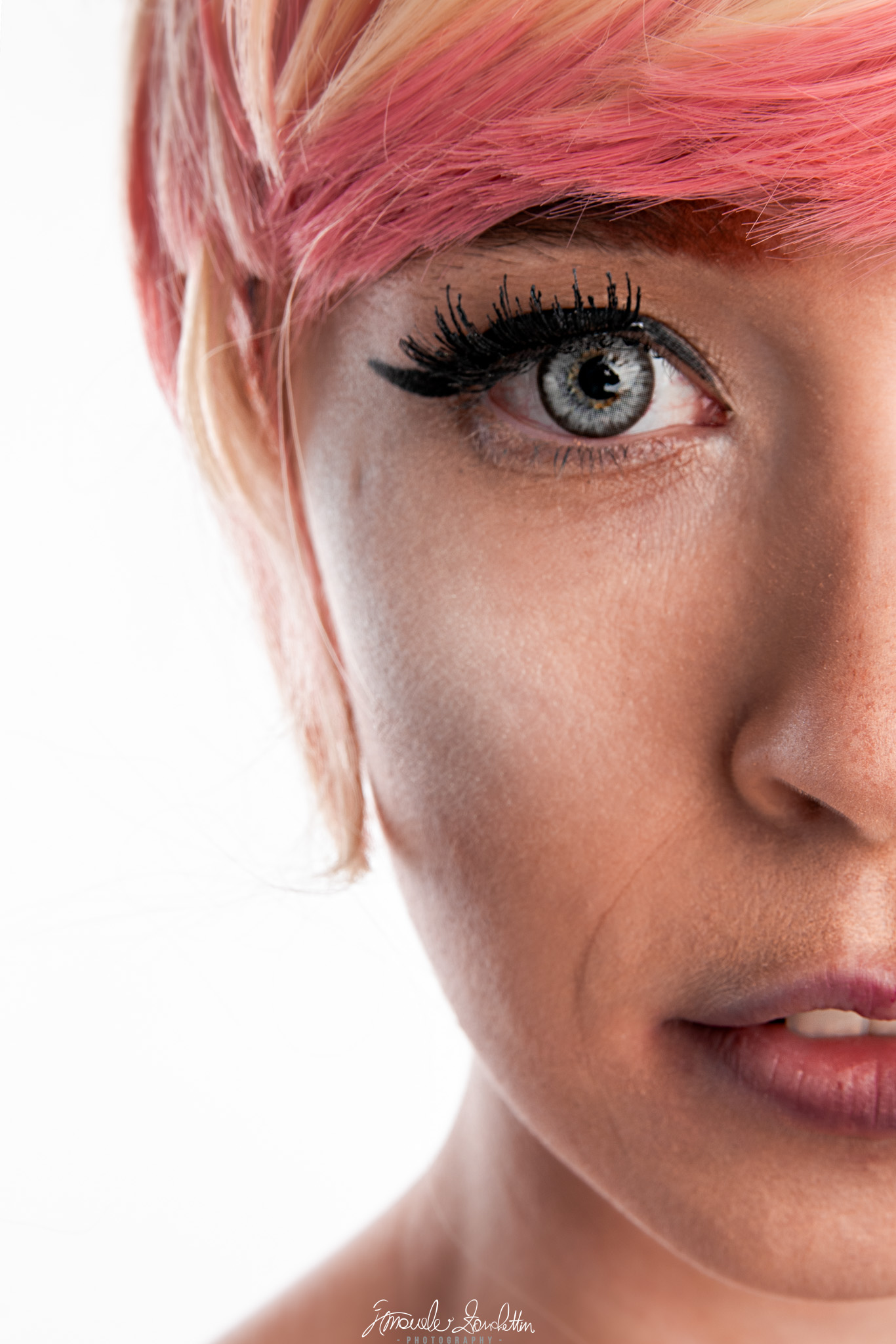
A personal project becomes more than a collection of attractive photographs when one visual rule keeps asking the same question. Half Life shows one eye and half a face, then uses what is missing to ask how much a portrait can reveal—and how much of another person must always remain beyond the frame.
The short version
- Give a personal project a reason, a motivation and a goal before deciding how it should look.
- A strict repeated rule creates continuity; carefully chosen variations keep each portrait individual.
- Technique is strongest when focus, crop and light serve the idea rather than becoming the idea.
- A portrait can invite interpretation without claiming to know or explain the person it depicts.
Begin with a reason, a motivation and a goal
A reason explains why the project matters. Motivation is what makes you return after the novelty of the first photograph. A goal gives the work a form: perhaps five finished portraits, a sequence for a wall, a small book or a body of work that can continue for years. Without those decisions, a visual idea can remain only a style exercise.
Half Life grew from Emanuele’s central interest in photographing women. Keeping that subject consistent gave the project a coherent field of enquiry, but the women are not presented as examples of one shared identity. The repeated composition makes their differences more visible. Each participant remains a person, not a symbol to be explained by the photographer.
Half a face is not half a person
The title contains a deliberate contradiction. Seeing an entire face would still not reveal an entire life. A portrait can record appearance, gesture and one encounter, but it cannot contain memory, relationships, private experience or everything that happened before the shutter opened. Showing only half makes that limitation impossible to ignore.
The absent half becomes active space. A viewer may imagine symmetry, a mirror image or something unexpectedly different. None of those guesses has to be correct. The project is not a puzzle with a hidden solution; it is an invitation to notice how quickly we complete another person from incomplete information.
This is where the project moves from technique into philosophy. The crop does not reduce the subject. It challenges the assumption that showing more would allow us to know more.
Let one eye hold the encounter
One visible eye gives the series a clear point of return. It meets the viewer directly, holds the composition together and provides a precise technical priority for focus. Hair, skin, shadow and the edge of a mouth can remain secondary as long as the eye carries the intended attention.
The eye is not proof of an inner life and the camera cannot read a soul. It creates contact, not certainty. That restraint matters: the portrait can feel intimate without pretending that intimacy gives the photographer ownership of the person’s story.
During the session, place the focus point deliberately on the visible iris or nearest eyelashes and check it at full size. Choose enough depth of field for the eye area you want to hold, then position the light so the iris, eyelids and surrounding texture separate without flattening the face.
Repeat the rule; vary what carries identity
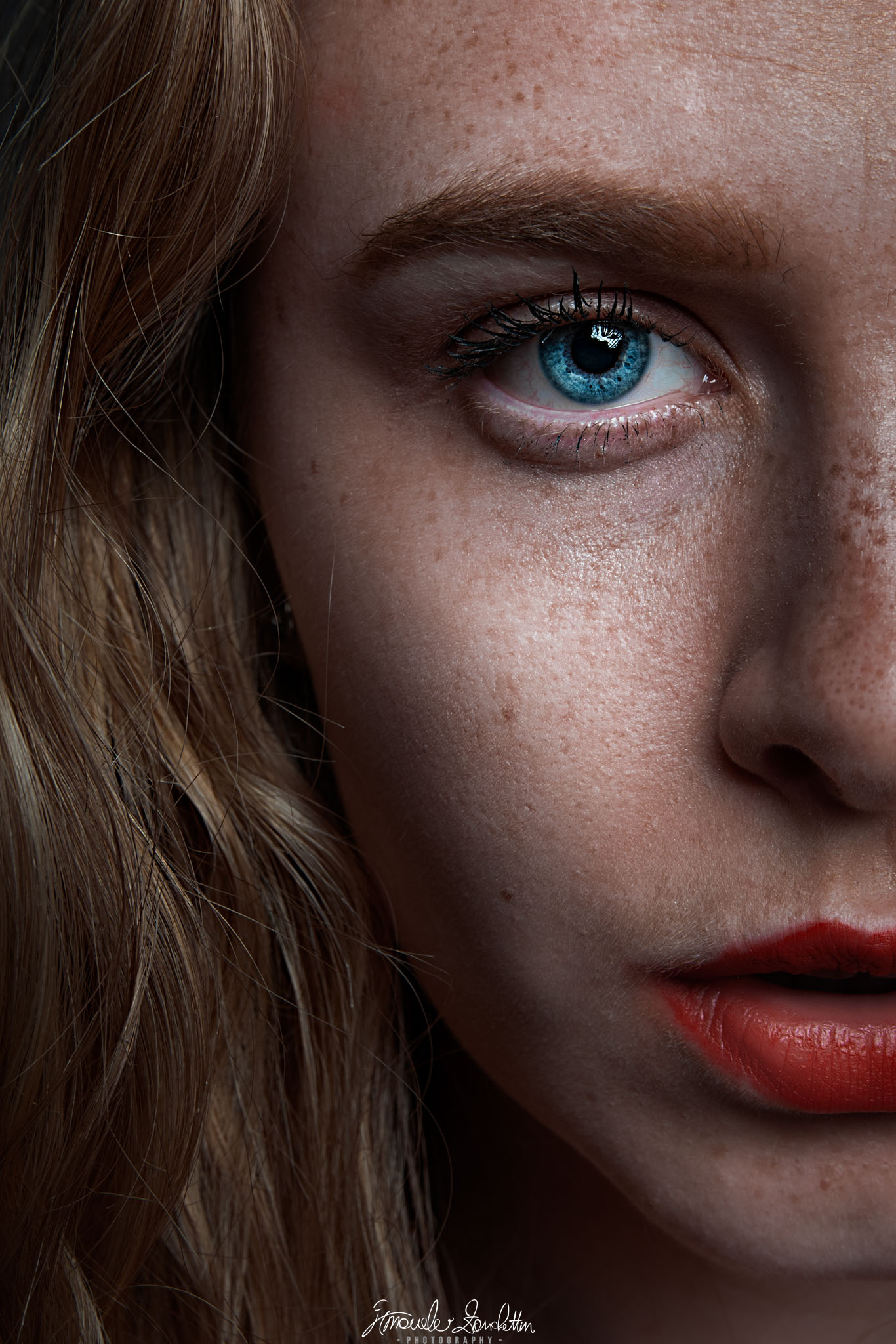
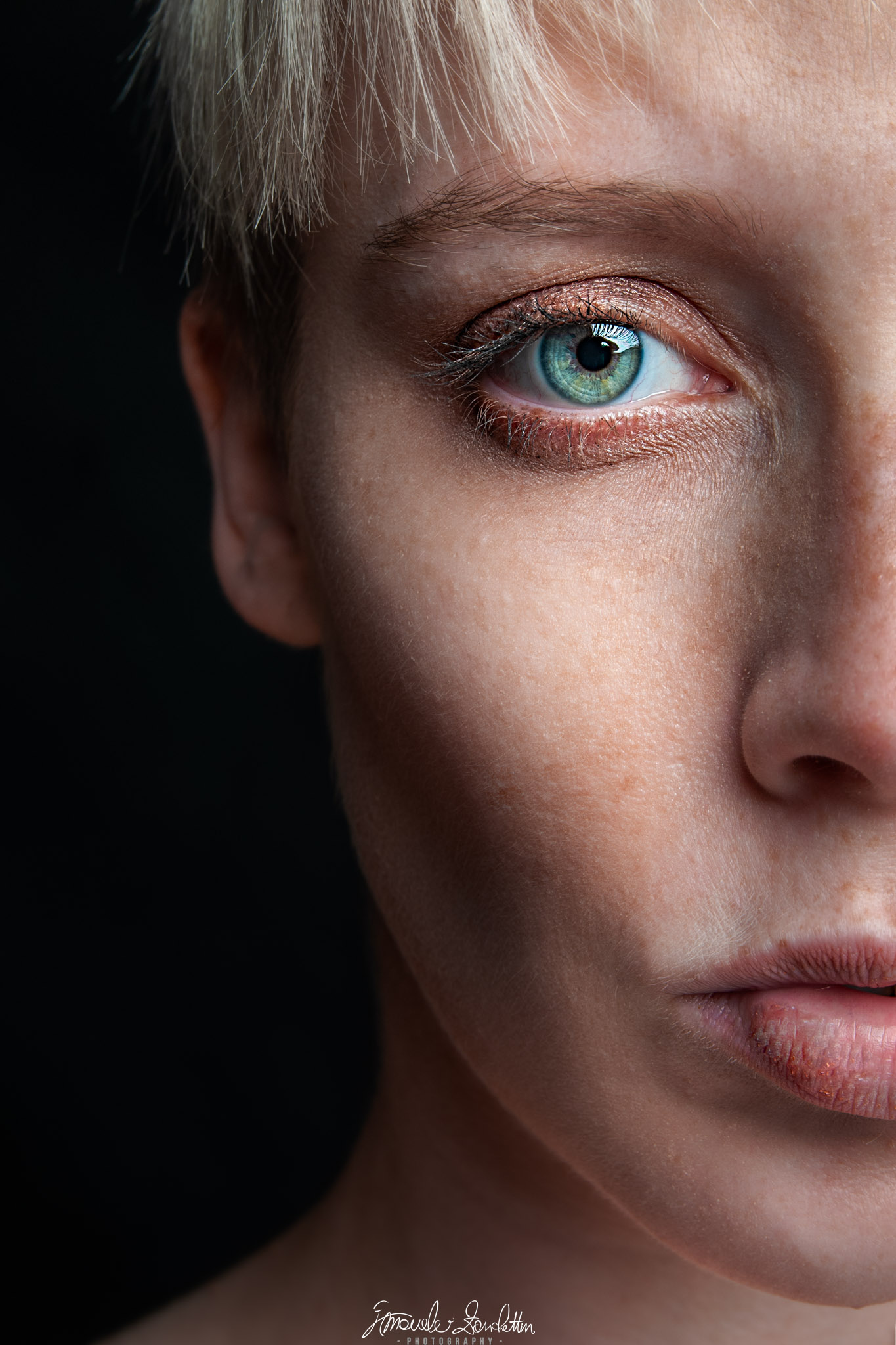
A project needs enough consistency to be recognised as one body of work. Here the constants are a vertical close portrait, one visible eye, roughly half the face, direct attention and very little environmental context. Those limits remove many decisions and let smaller differences become important.
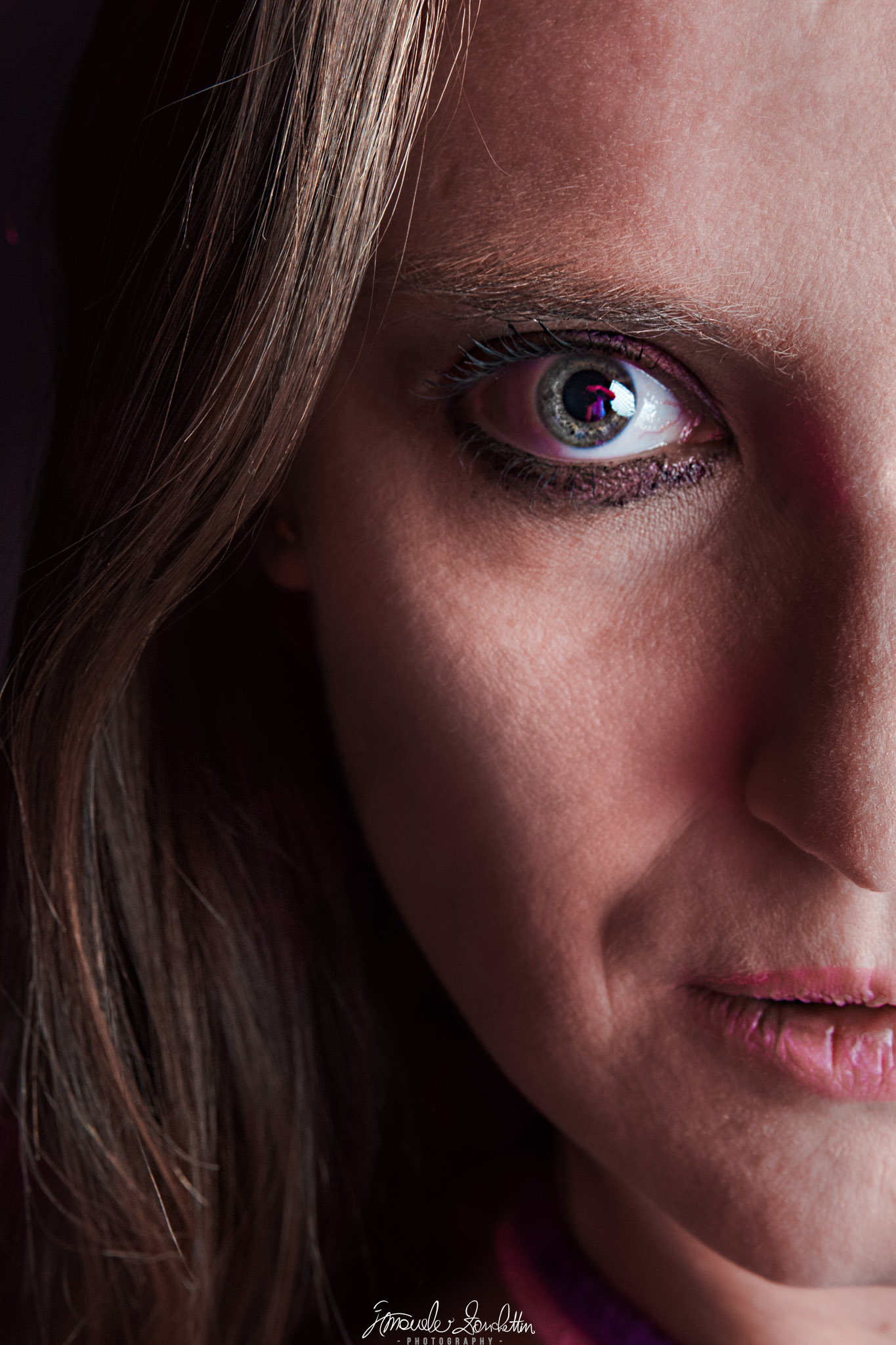
The variables are equally deliberate: cool or warm colour, hard or soft light, high-key or dark background, hair crossing the frame, makeup, expression and the amount of skin texture retained. Consistency is not sameness. It is the structure that lets variation speak.
A face can resemble another; a life cannot be duplicated
Faces contain echoes of family, fashion and familiar ideas of beauty, yet no two people arrive with the same history. Asymmetry, expression, habitual movement and marks left by time contribute to individuality. Scars or injuries, where a person chooses to show them, belong to lived experience rather than to a visual category.
Even genetically identical people do not accumulate identical days, decisions, relationships or memories. Copying appearance cannot clone experience. Half Life leaves room for that difference instead of trying to catalogue it.
The photographer must also resist inventing biography from visible detail. A mark, expression or styling choice can be described, but its meaning belongs first to the participant. The hidden half is therefore not an excuse to fabricate a story about her; it is a reminder that the story exceeds the photograph.
Edit the sequence, not only the individual frames
A personal project is finally understood through relationships between photographs. Place two similar portraits together and the repeated structure becomes obvious. Introduce a change in brightness, colour or direction and the viewer feels a shift. Sequence can create rhythm without forcing the people into a fictional narrative.
For Half Life, one possible movement begins with cool colour and a dark field, becomes warmer and more direct, enters deeper shadow, returns to a quieter dark portrait and finishes in high-key pink. Another sequence might group similar eye lines or alternate light and dark. Print small copies or make a contact sheet; order becomes easier to judge when the series can be moved by hand.
- Remove a strong photograph if it breaks the project’s visual question.
- Avoid selecting two frames that perform exactly the same role.
- Look for an opening image that establishes the rule and a final image that changes or releases it.
- Stop when the next portrait only repeats an answer you already have—or deliberately change the rule and begin a new chapter.
Make the concept a collaboration
A close portrait asks for trust. Explain the project, the crop, where the photographs may appear and how long the session will take before making the image. Confirm consent for both the sitting and the intended publication, and agree whether the participant may review the final selection. A model release should reflect the actual use rather than becoming a substitute for a clear conversation.
Invite each participant to influence expression, styling and how she wishes to be represented. The visual rule belongs to the project; the face belongs to the person. That balance protects dignity and often produces a more present, less mechanical portrait.
Use the same framework for your own personal project
Your subject does not need to be portraiture. A personal project might follow one street in different weather, objects repaired by hand, the same tree through a year or gestures people make while waiting. What makes it personal is not that nobody else has photographed the subject. It is the reason you continue, the choices you repeat and the questions you allow the work to change.
Write one sentence for each of these before shooting: why this matters to you, what will keep you returning, what the finished project might become, which rule every frame must obey, which variables may change and what would make you stop or begin a second chapter. Then make a small first edit and let the photographs challenge the original statement.
Readers’ thoughts
Approved comments only · Shared across the English and Italian versions