
Travel photography
Travel photography beyond the postcard
Venice is photographed constantly from bridges, squares and boats. Familiar views are worth enjoying, but a travel photograph becomes personal when it records more than the place name. These ten photographs show how changing height, accepting obstructions, following details and returning in different light can turn a visit into a visual story.
The short version
- Make the recognisable view if you want it, but do not let it end the exploration.
- Change camera height, distance and direction before assuming you need different equipment.
- Collect details, human traces and changes in light so the photographs can tell a story together.
Make the postcard—then move on
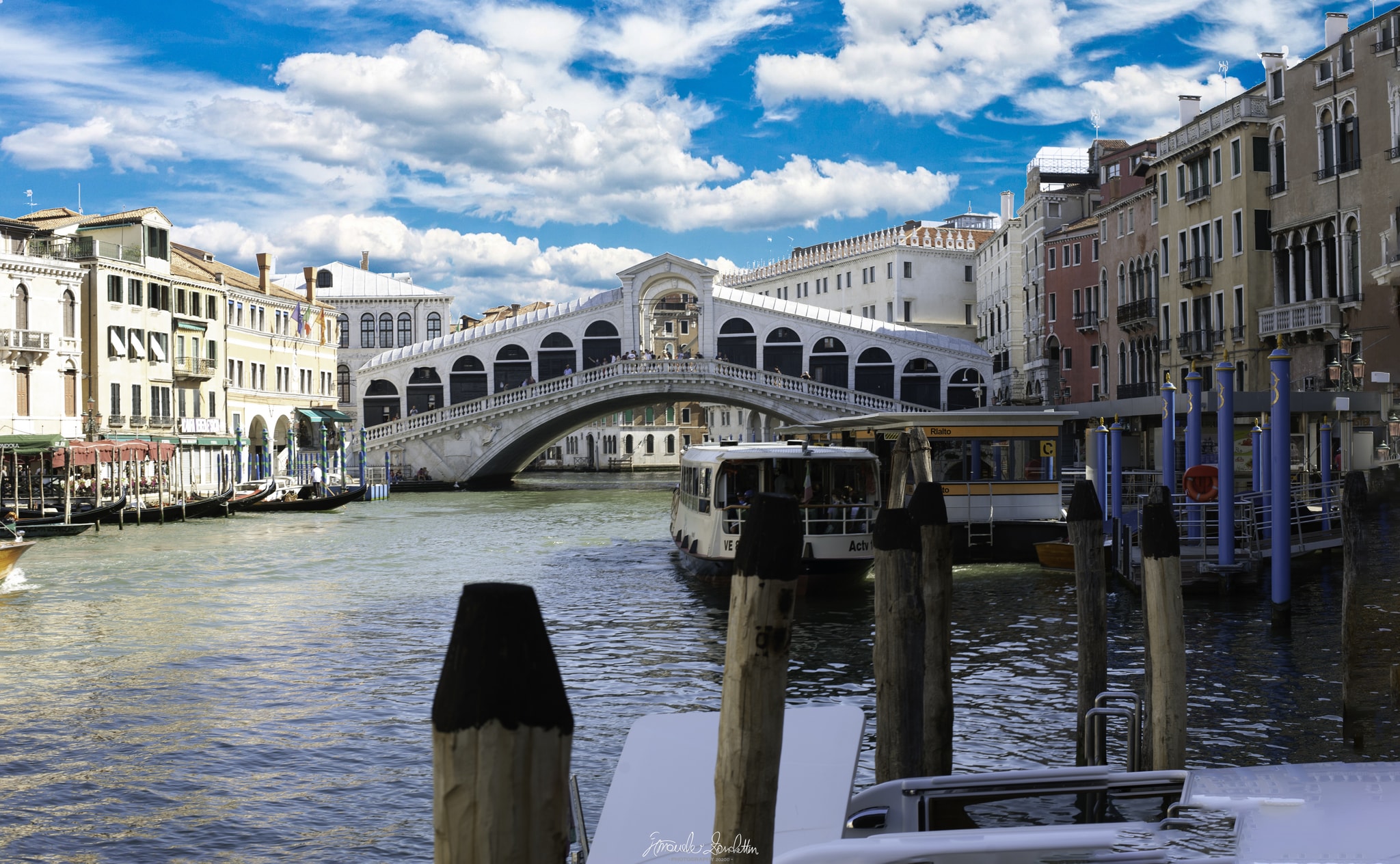
There is nothing wrong with photographing a famous view. The Rialto Bridge is recognisable for a reason, and making that frame can be part of enjoying the visit. The problem begins when the first obvious position becomes the only position.
Treat the expected photograph as a reference. Once you have it, look behind you, study the edges, follow a reflection, wait for a person or boat to change the balance, or walk until the landmark is no longer the whole subject. The postcard proves where you were; the photographs that follow can show how you saw it.
Change height before changing equipment
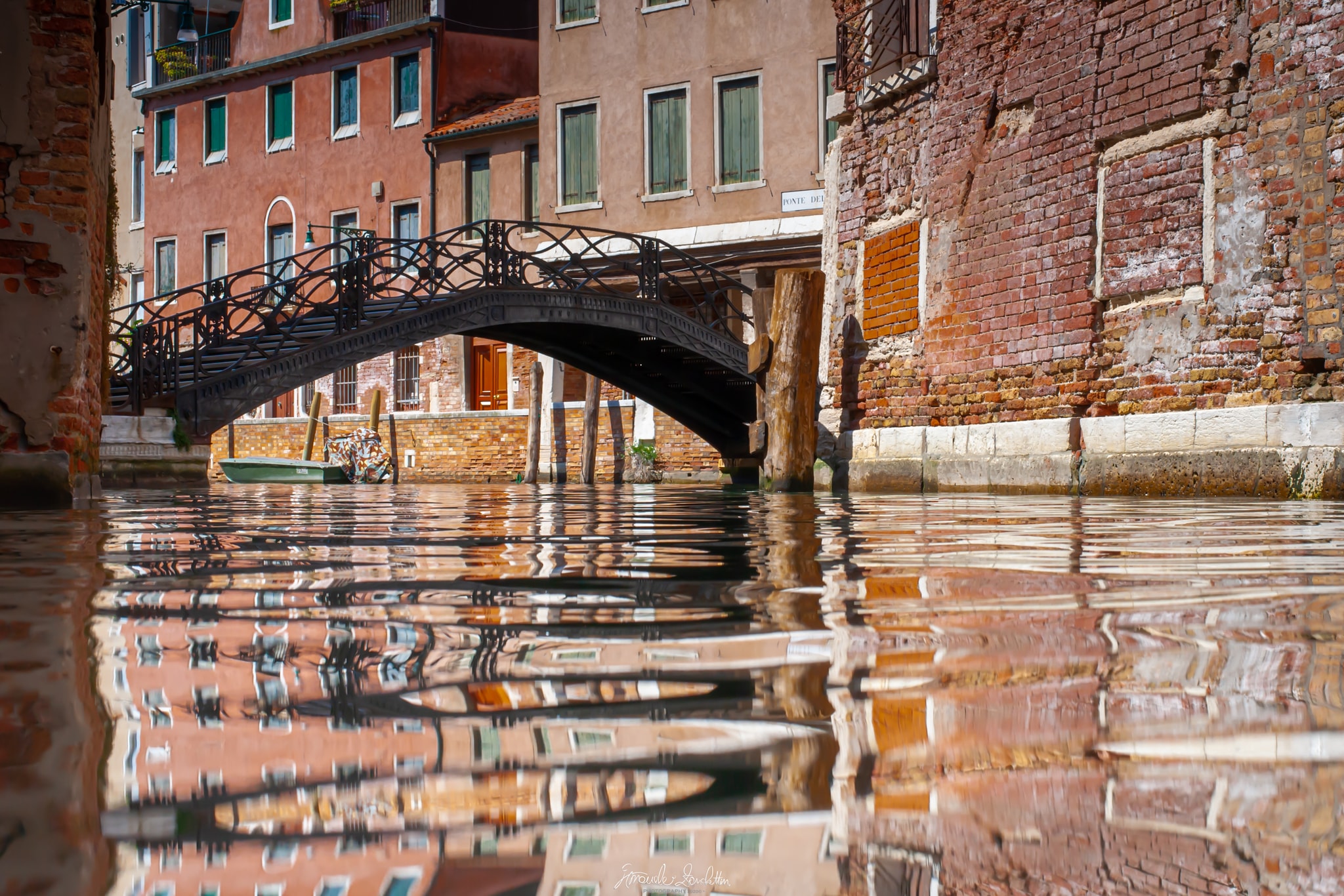
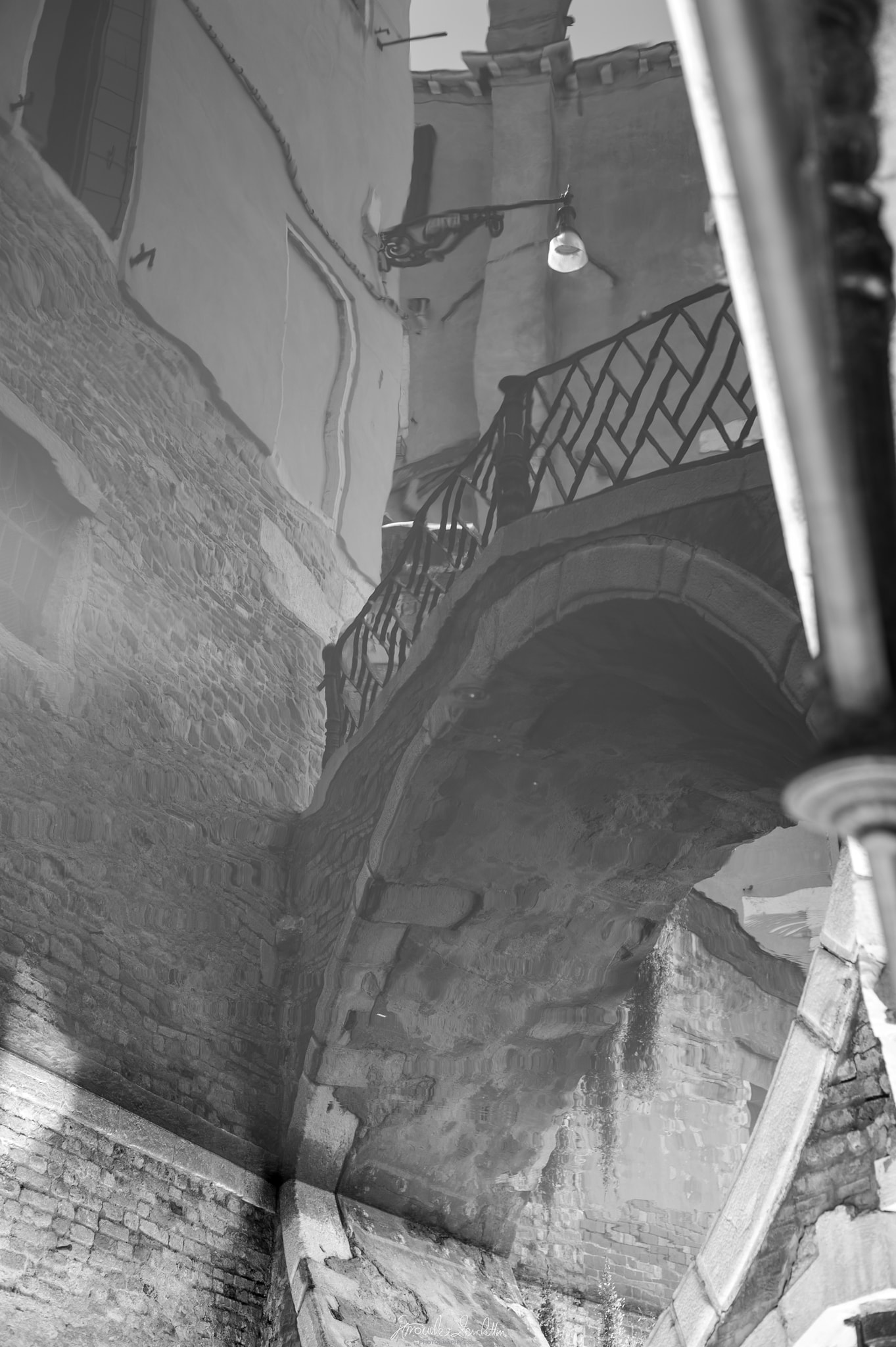
The opening photograph brings the camera close to the canal surface, allowing the reflection to occupy half the frame. A bridge that might look ordinary from standing height becomes an arch floating above a second, broken version of the city. Moving the camera changed the picture more than buying another lens would have done.
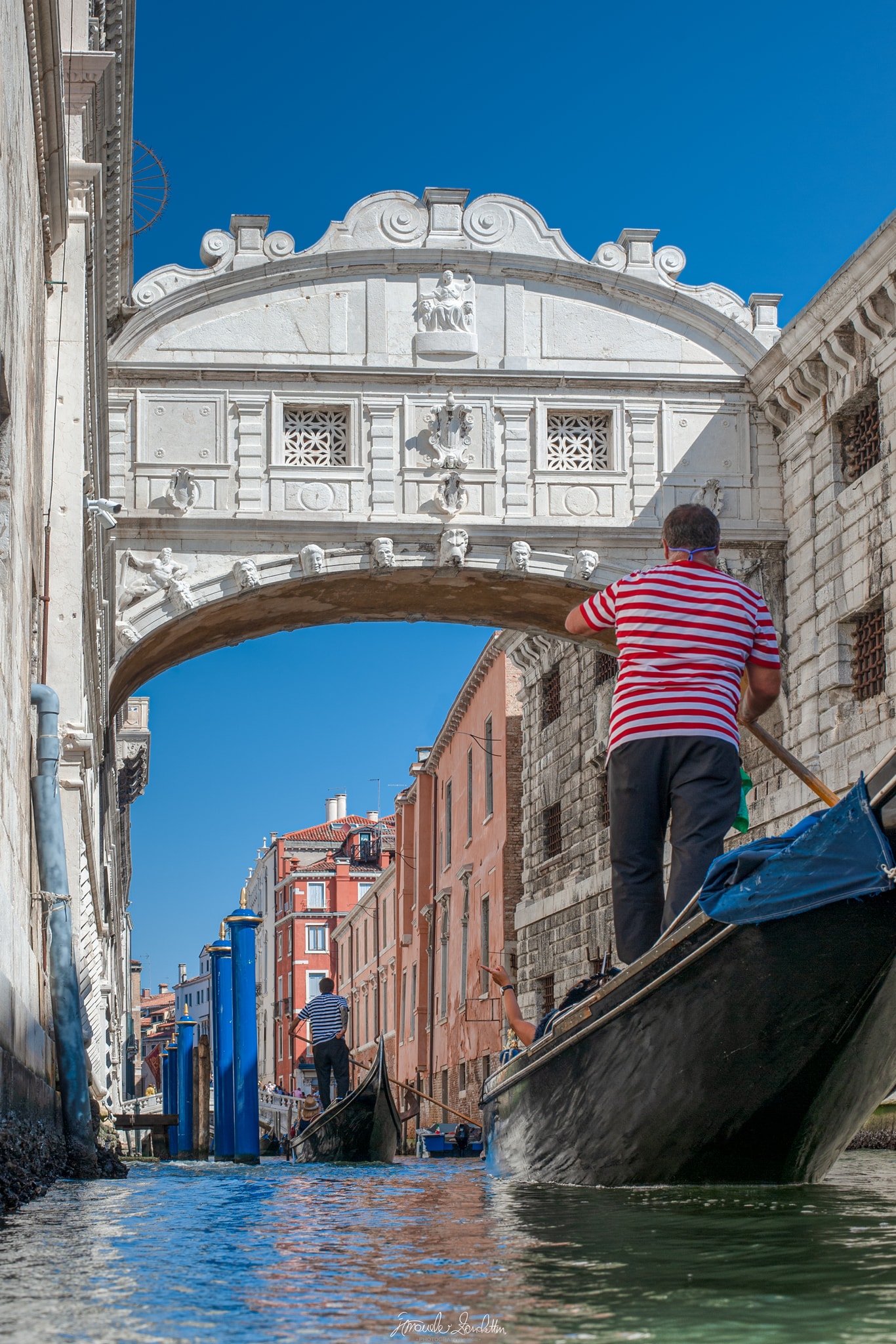
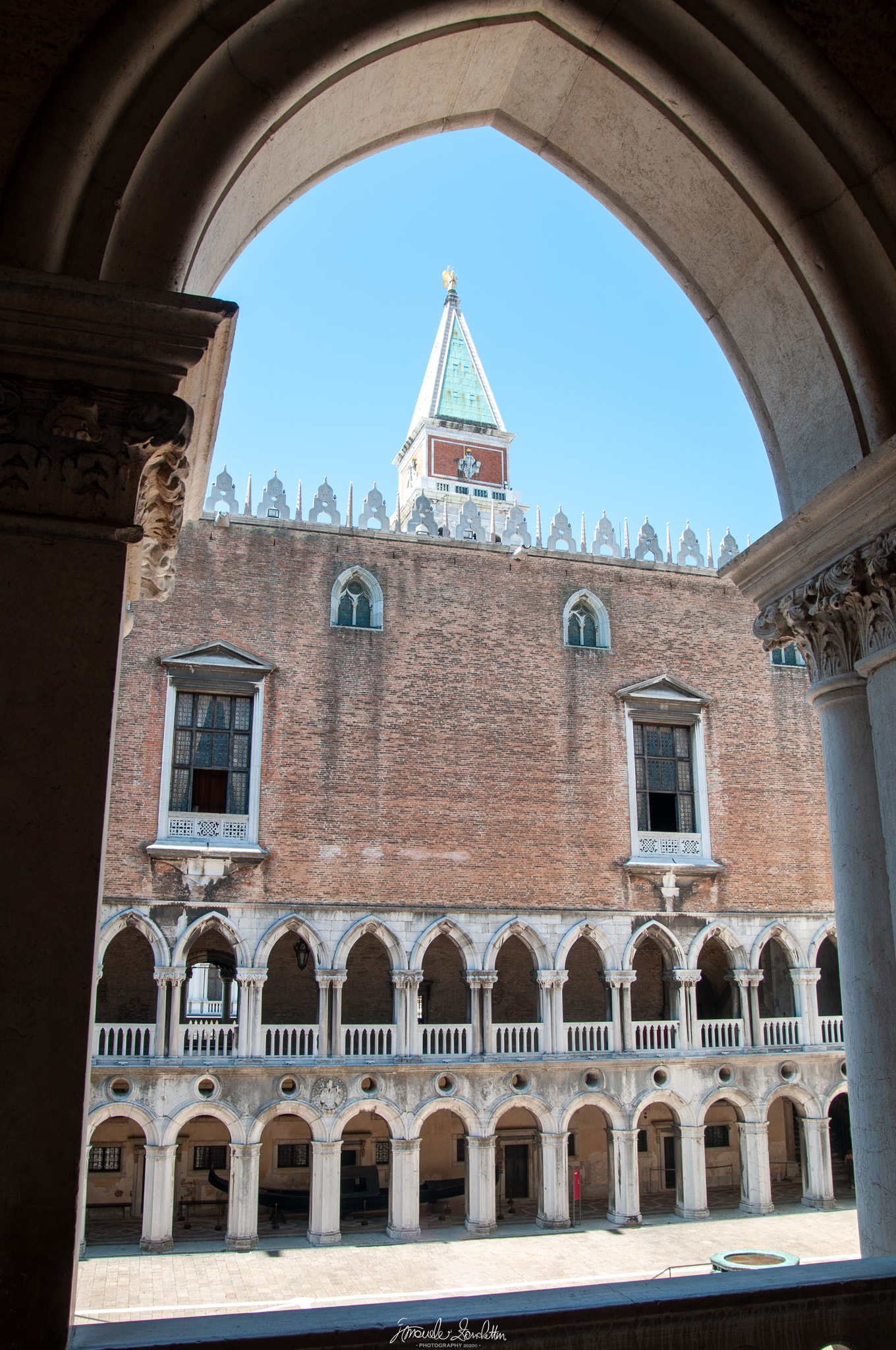
A viewpoint from the water places a gondolier inside the architecture beneath the Bridge of Sighs. Elsewhere, a dark arch is used as a large frame around the buildings beyond. Both photographs include a famous place, but neither begins with the standard open view. Foreground, height and position give the landmark a role inside a composition.
Look for places where other visitors do not pause, but stay on permitted routes and choose a safe, stable position. Thinking differently never requires trespassing, obstructing people or leaning into danger beside the water.
Look at the city indirectly
A reflection can rearrange familiar architecture. Walls bend, stair rails become wavering lines and the viewer needs a moment to understand which way is up. That small delay encourages a longer look because the photograph asks a question before it gives the answer.
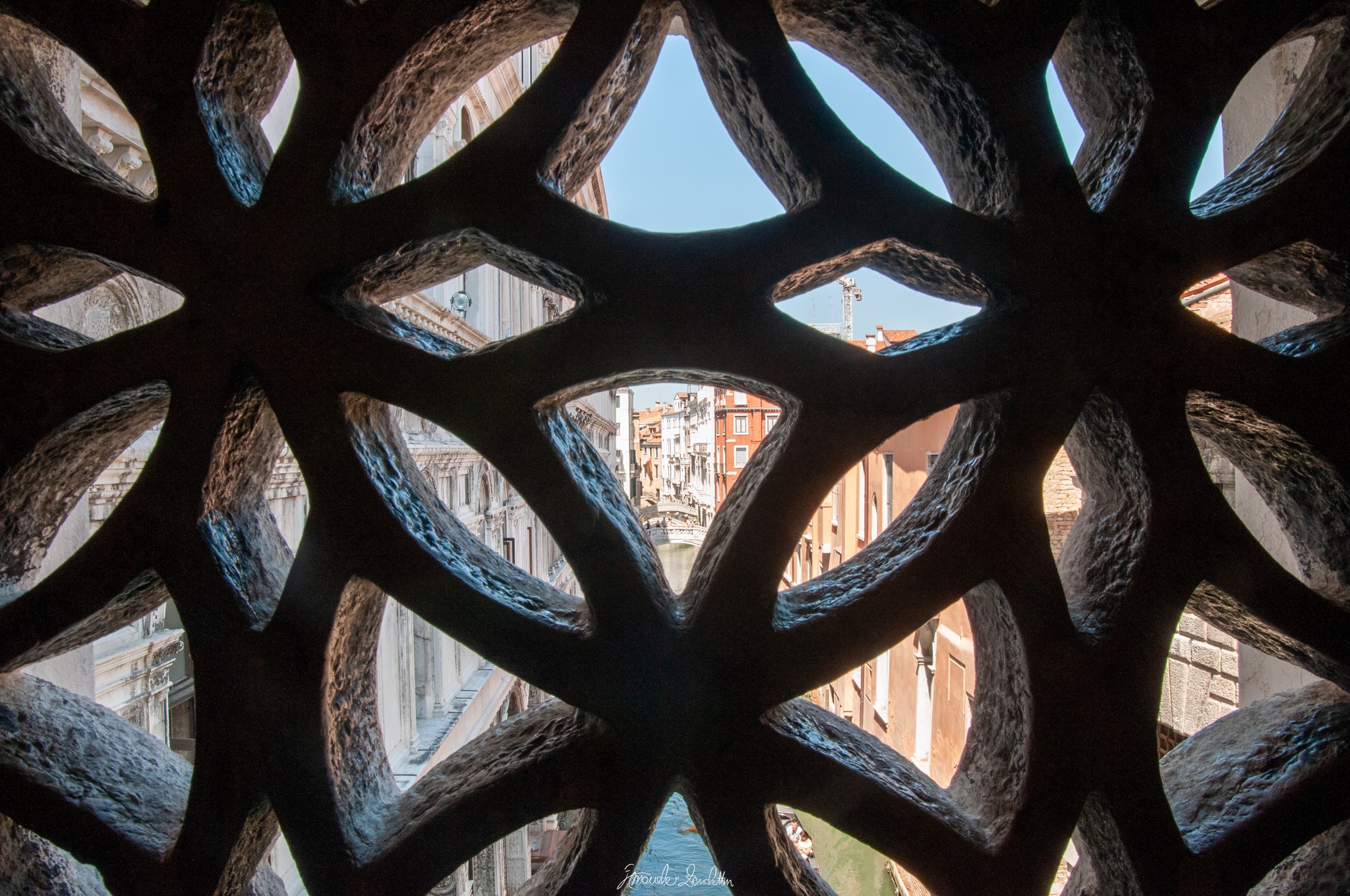
Obstructions can do the same thing. Instead of avoiding a carved stone screen, use its repeated openings as a pattern and allow only fragments of canal and buildings to appear beyond it. The city is still present, but curiosity replaces description.
Let details carry the sense of place
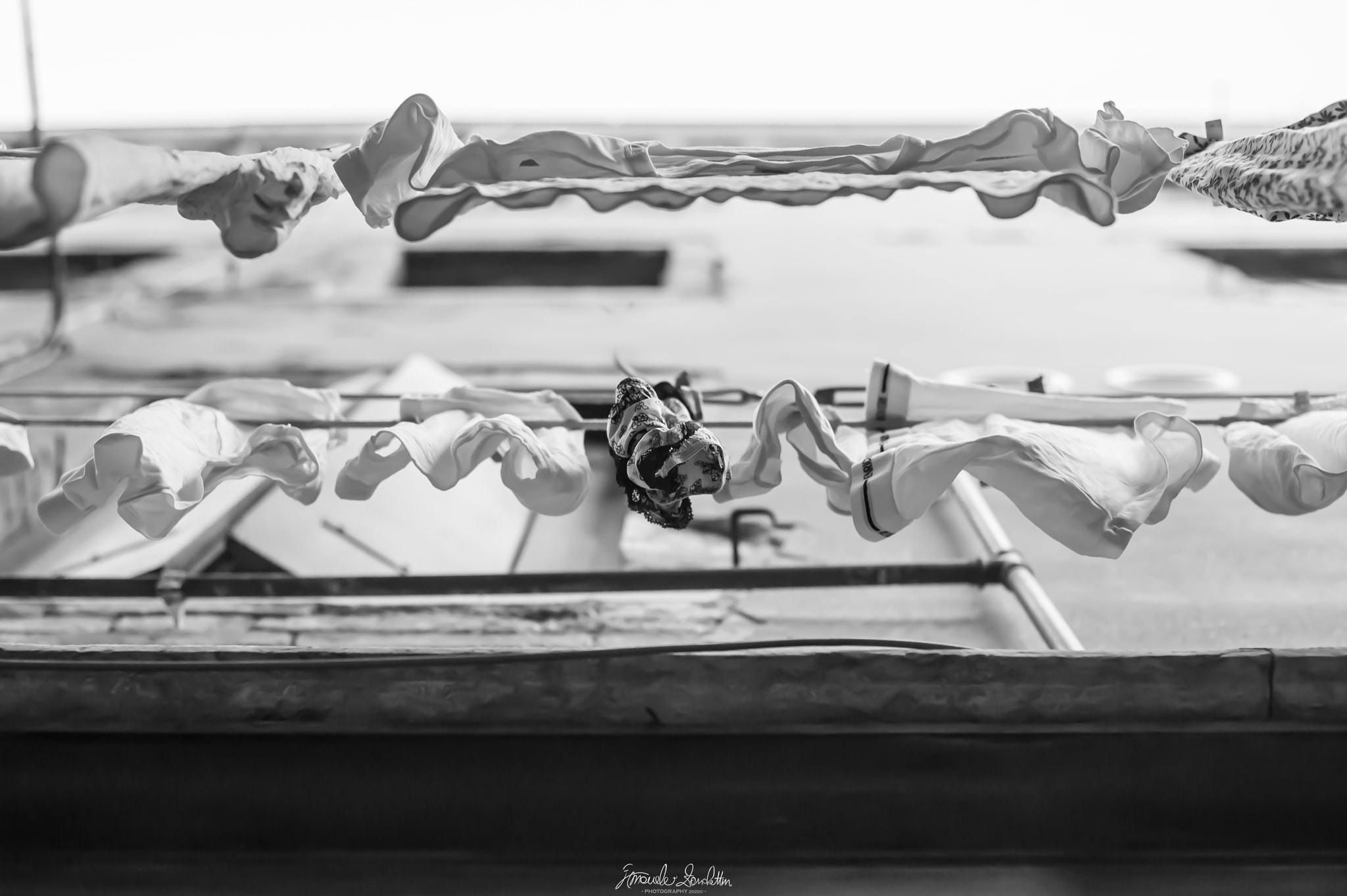
Travel stories need more than landmarks. Laundry stretched above a narrow space speaks about daily life, scale and proximity. In black and white, the hanging fabric becomes a rhythm of knots, folds and horizontal lines rather than a simple record of colour.
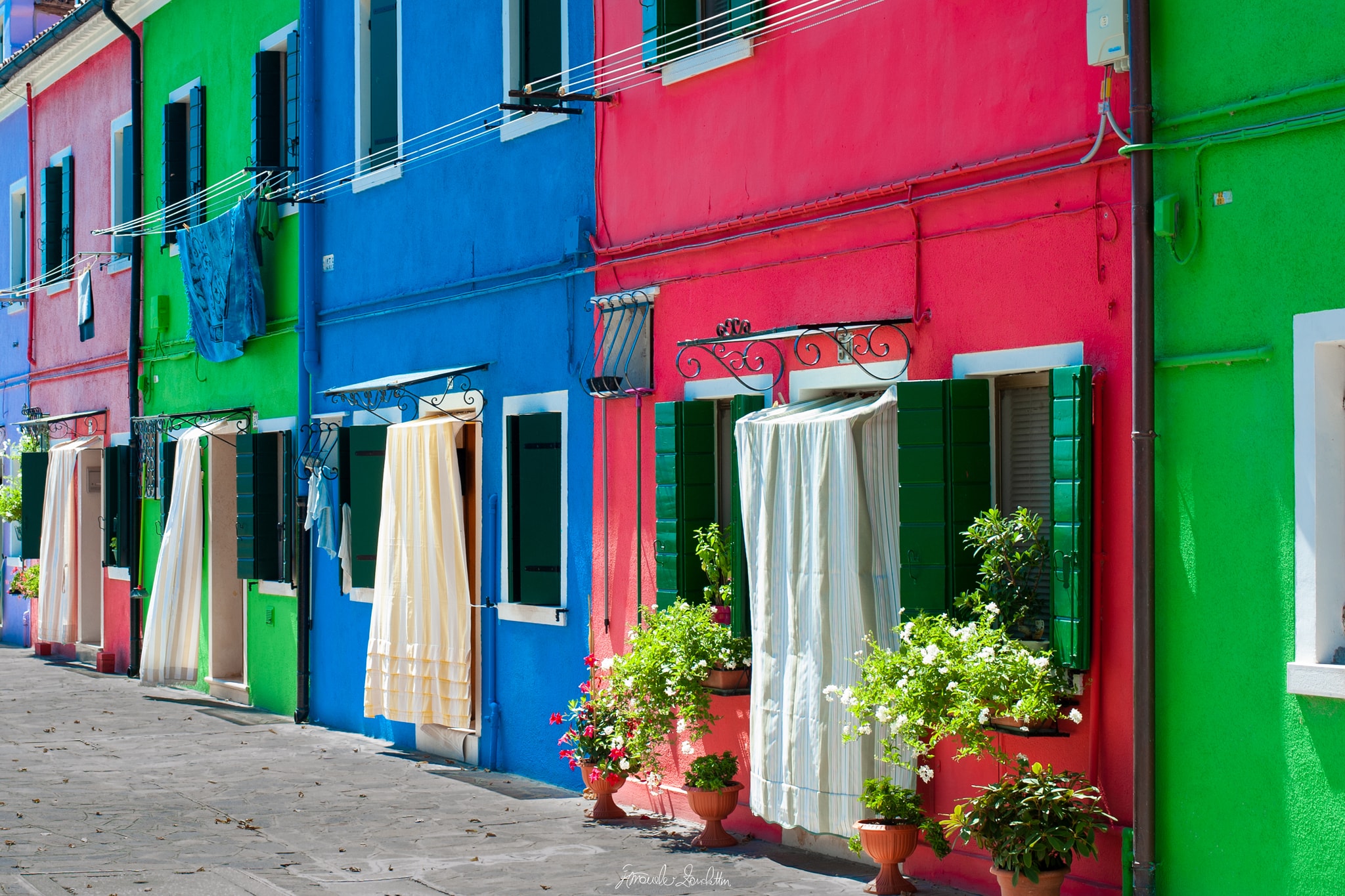
On Burano, colour is part of the place, but the strongest clue is not colour alone. Shutters, washing lines, plants, cables and fabric show that these bright façades are lived in. Details give personality because they describe how a place works, not only how it looks from a distance.
Return when the city changes character
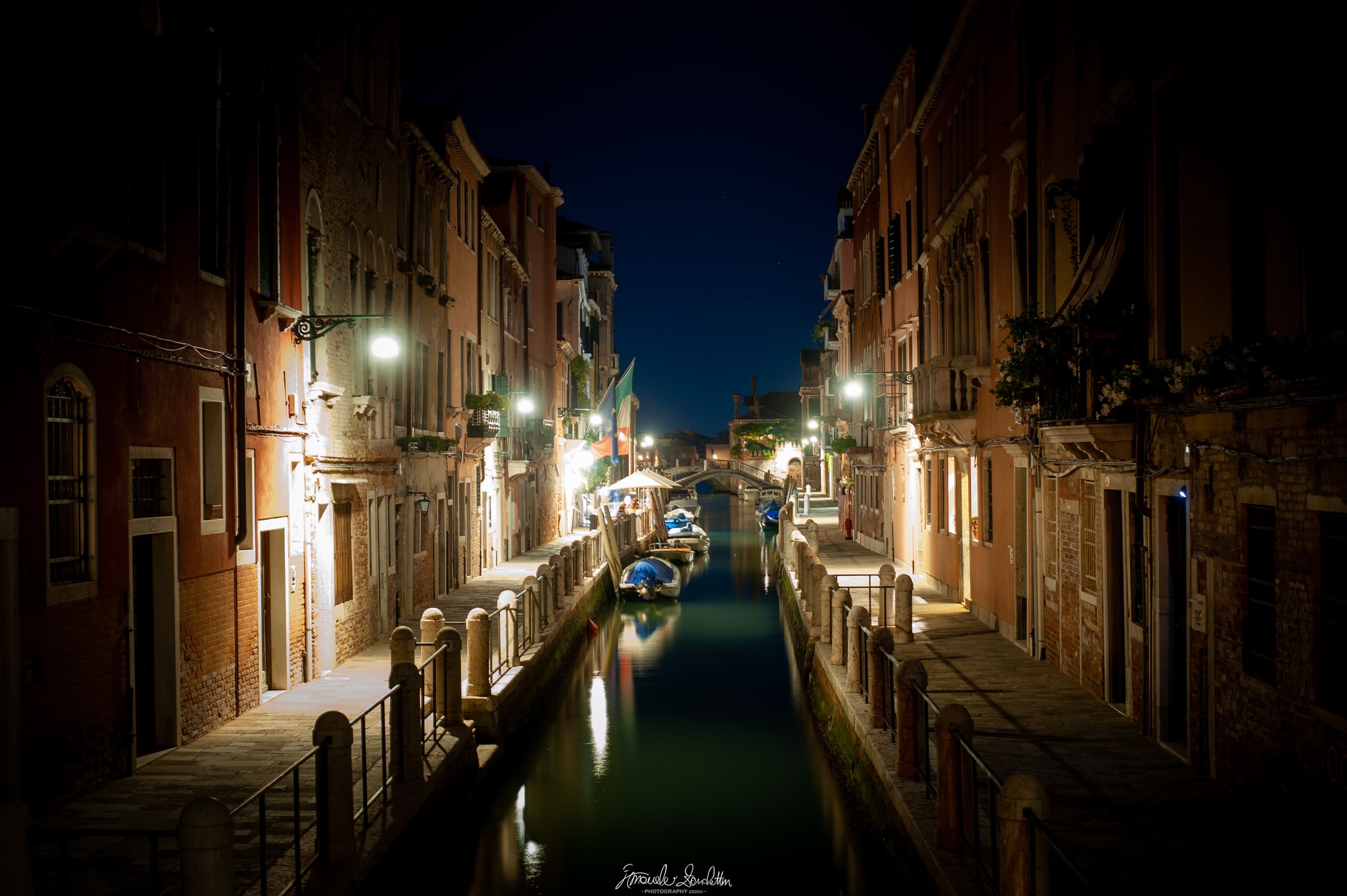
A place is not visually finished at midday. After dark, busy routes can become quiet arrangements of pools of light, empty paths and reflections. The canal photograph uses a 15-second exposure at f/4 and ISO 100; movement settles and the lit façades lead towards the distant bridge.
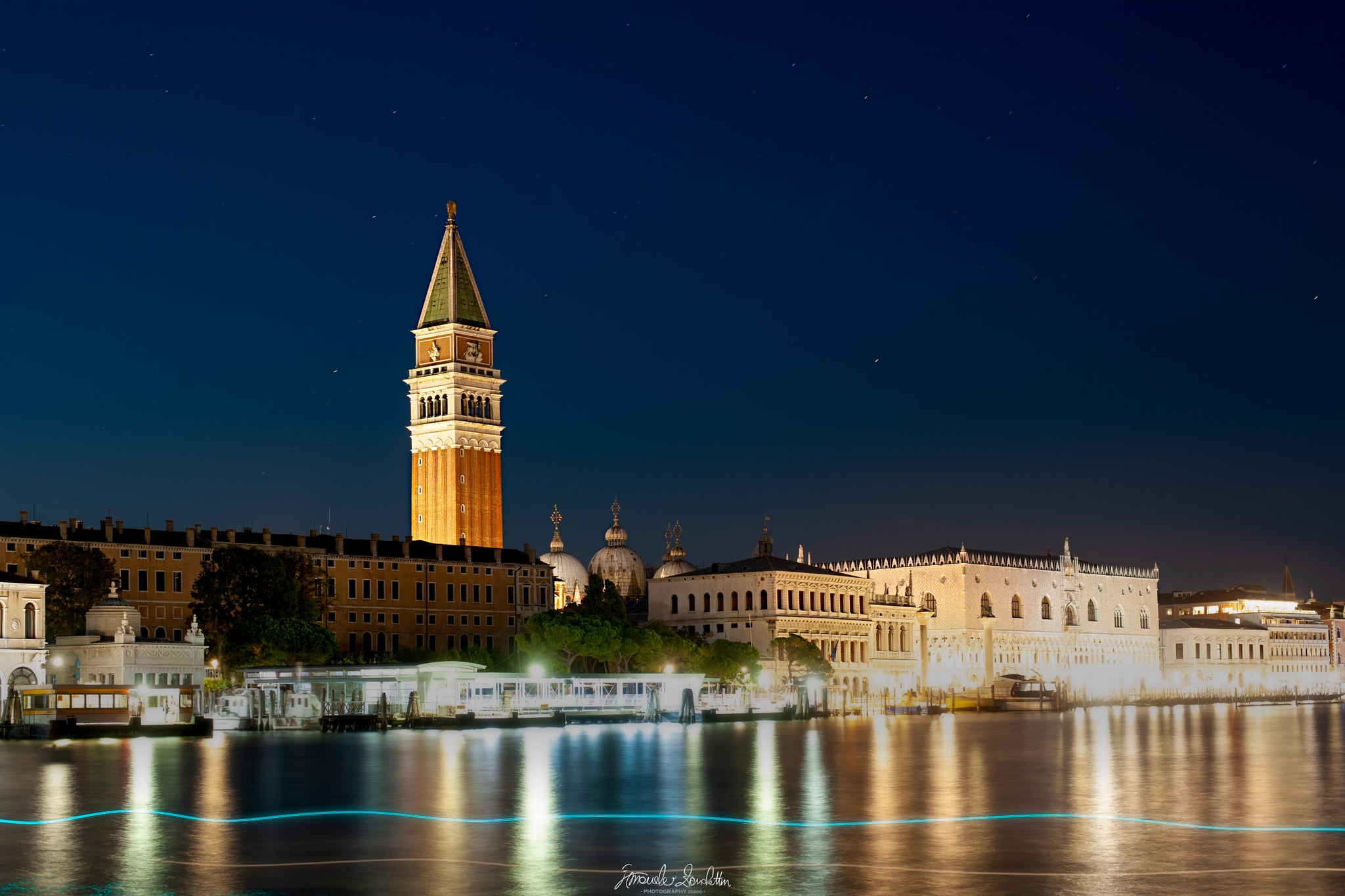
The view across to St Mark’s uses 30 seconds at f/4 and ISO 100. The buildings remain recognisable, but a thin blue light trace records movement across the water. Time becomes part of the story, turning a familiar skyline into an image about stillness and passage.
For night work, protect bright lamps from clipping, support the camera securely and make small exposure changes after checking the histogram. Stay aware of your surroundings, keep paths clear and choose a position where you and the equipment are not vulnerable to passing people or water.
Build a story, not a random collection
A travel story can begin with an establishing view, move closer to texture and daily life, introduce a person or action, change pace with a reflection or abstraction, and finish when the light changes. The photographs do not need to show everything. They need to feel connected by your attention.
When reviewing the day, remove images that repeat the same information. Ask what each frame contributes: location, atmosphere, scale, colour, movement, character or surprise. If two photographs perform the same job, keep the one with the clearer voice.
Personality does not mean forcing every image to look unusual. It means making decisions that belong to your experience of the place rather than returning with a random image from a random position in a famous city.
Readers’ thoughts
Approved comments only · Shared across the English and Italian versions